Black and Grey Lists
The Financial Action Task Force (FATF) identifies jurisdictions with inadequate measures to combat money laundering and terrorist financing (AML/CFT) through two public documents issued triannually. This process of public listing has been demonstrably effective. By June 2024, the FATF had evaluated 133 countries and jurisdictions, publicly identifying 108 with deficiencies. Of these, 84 have since implemented necessary reforms and have been delisted.
High-Risk Jurisdictions Subject to a Call for Action (i.e., “blacklist”)
This document, formerly known as the “Public Statement,” identifies countries or jurisdictions with severe strategic deficiencies in countering money laundering, terrorist financing, and proliferation financing. For all high-risk countries identified, the FATF urges members and other jurisdictions to apply enhanced due diligence. In the most severe cases, countries are advised to implement counter-measures to protect the international financial system from the risks posed by these jurisdictions. This is colloquially referred to as the blacklist.
Other Analogous Organizations and Lists
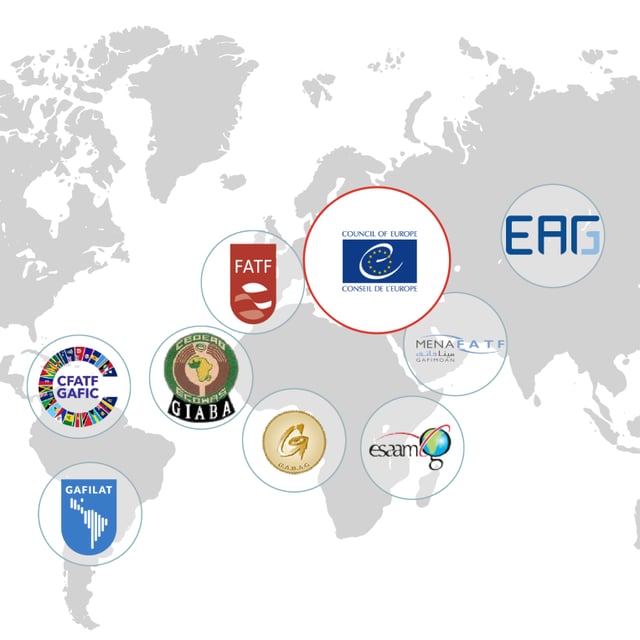
In addition to FATF, other international bodies and regional organizations maintain similar lists to monitor and combat money laundering and terrorist financing. Notable among these are:
1. MONEYVAL (Council of Europe)
MONEYVAL evaluates AML/CFT measures in European countries that are not members of the FATF. It issues reports and public statements identifying countries with strategic deficiencies.
- High-Risk and Non-Cooperative Jurisdictions:
- Similar to FATF’s blacklist.
- Jurisdictions Under Increased Monitoring:
- Comparable to FATF’s grey list.
2. Asia/Pacific Group on Money Laundering (APG)
APG assesses AML/CFT systems in the Asia-Pacific region and publishes mutual evaluation reports.
• Public Statements and Follow-Up Reports:
• High-Risk Jurisdictions.
• Jurisdictions with Strategic Deficiencies.
3. Caribbean Financial Action Task Force (CFATF)
CFATF monitors Caribbean nations, issuing public notices about non-compliant jurisdictions.
• Public Statements:
• Countries with AML/CFT deficiencies.
• Monitoring and Follow-Up:
• Countries under increased scrutiny.
4. Inter-Governmental Action Group against Money Laundering in West Africa (GIABA)
GIABA evaluates AML/CFT measures in West African nations, providing similar public notices and reports.
5. Eastern and Southern Africa Anti-Money Laundering Group (ESAAMLG)
ESAAMLG oversees AML/CFT compliance in Eastern and Southern African countries, issuing evaluation reports and public notices.
To explore more about FATF’s global network and the membership of its regional partners, one can access detailed information on the respective official websites of these organizations.
FATF
6.2026
Black list: High-Risk Jurisdictions
- Democratic People's Republic of Korea
- Iran
- Myanmar
Grey List: Increased Monitoring
- Angola
- Bolivia
- Bosnia and Herzegovina (added 19 June 2026)
- Bulgaria
- Cameroon
- Côte d'Ivoire
- Democratic Republic of the Congo
- Haiti
- Iraq (added 19 June 2026)
- Kenya
- Kuwait
- Laos
- Lebanon
- Monaco
- Nepal
- Papua New Guinea
- South Sudan
- Syria
- Venezuela
- Vietnam
- Virgin Islands (UK)
- Yemen
MONEYVAL
MONEYVAL does not maintain its own black or grey list. It is the Council of Europe's evaluation body for member states outside the FATF membership, and it works through mutual evaluation reports and follow-up assessments.
Its findings feed the FATF process directly. Bosnia and Herzegovina was added to the FATF grey list in June 2026 on the strength of the MONEYVAL mutual evaluation published in December 2024, which identified strategic deficiencies in its regime. Bulgaria's action plan, agreed in October 2023, was made jointly with the FATF and MONEYVAL.
For listing status, read the FATF statements. For the underlying assessment of a European jurisdiction, read the MONEYVAL evaluation report.
Basel AML List Countries
Basel AML List
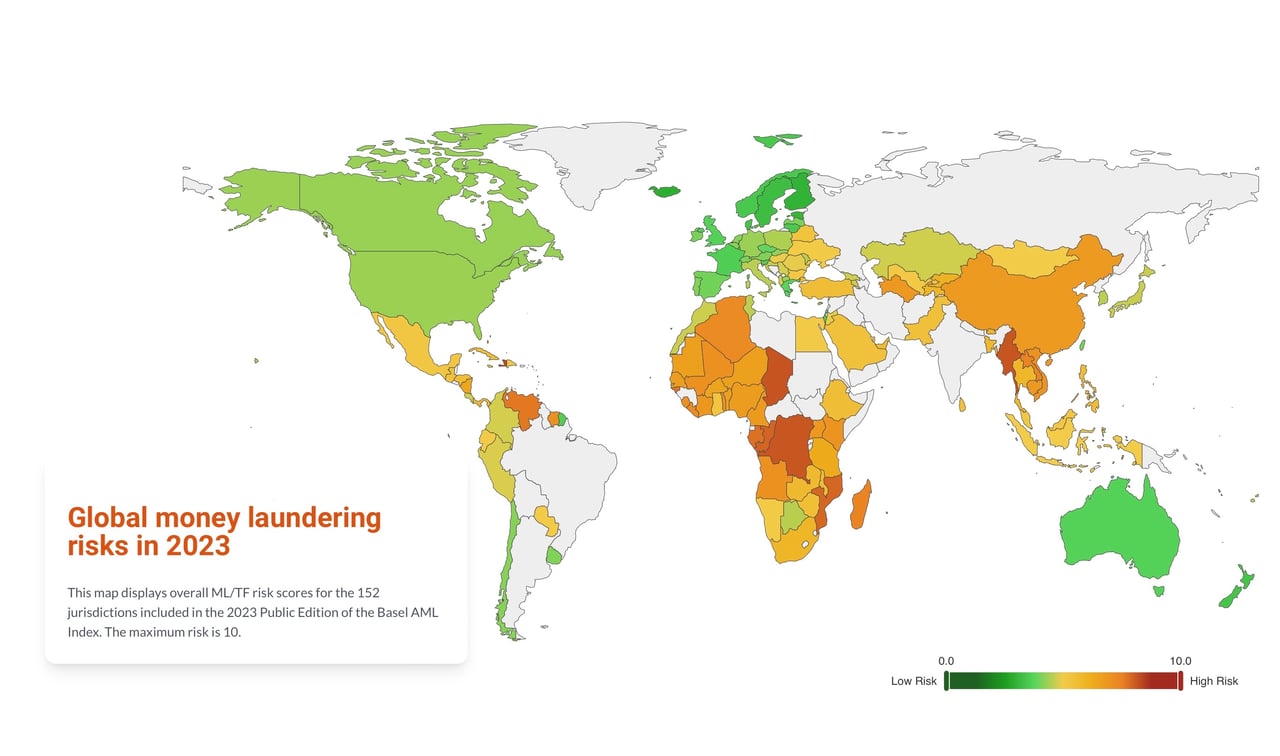
Basel Institute on Governance (Basel AML Index)
Description: The Basel AML Index is an annual ranking of countries based on their risk levels related to money laundering and terrorist financing. It assesses countries’ AML/CFT frameworks, corruption levels, political transparency, and other factors that contribute to financial crime risk.
European Union high-risk third countries
The European Commission maintains its own list of third countries with strategic AML/CFT deficiencies under Delegated Regulation (EU) 2016/1675. Listing triggers mandatory enhanced due diligence for EU obliged entities. The list broadly tracks the FATF statements, but it is not identical to them, and the differences matter.
The Annex was last revised by Delegated Regulations (EU) 2026/46 and (EU) 2026/83, published in the Official Journal on 9 January 2026 and in force from 29 January 2026.
What changed:
A new Point IV lists the Russian Federation, in a category of high-risk third countries not identified by the FATF as subject to a call for action or increased monitoring, but whose FATF membership is suspended. This is the clearest current instance of the EU list diverging from the FATF lists.
Bolivia and the British Virgin Islands were added.
Burkina Faso, Mali, Mozambique, Nigeria, South Africa and Tanzania were removed.
The list fell from 41 to 35 jurisdictions.
A practical distinction, confirmed for German obliged entities by BaFin Circular 03/2026 (GW) of 30 March 2026: countries listed in the EU Delegated Regulation trigger mandatory enhanced due diligence under German AML law. Countries appearing only on the FATF grey list must be reflected in the risk assessment but do not of themselves trigger additional legal obligations. Firms that conflate the two over-apply EDD and under-document why.
Egmont Group of Financial Intelligence Units
Description: The Egmont Group is a global network of financial intelligence units (FIUs) that cooperate to combat money laundering and terrorism financing. While the Egmont Group does not maintain a formal blacklist, it encourages member states to comply with international standards and cooperates with FATF to track non-compliant jurisdictions.
Countries: Egmont Group promotes transparency, so non-participating or non-cooperating FIUs are often countries of concern.
- Examples of Countries Not in Full Compliance: Some countries, like North Korea, are not members or are under scrutiny for lack of cooperation.
European Union (EU) AML Blacklist
Description: The European Union maintains its own list of high-risk third countries that have strategic deficiencies in their AML/CFT frameworks. This list often mirrors the FATF’s black/grey lists but may include additional countries that the EU assesses as not meeting its specific criteria.
Countries: The EU list is updated regularly and includes countries identified by both the FATF and the European Commission.
- Examples (as of 2024): Afghanistan, North Korea, Iran, Myanmar, South Sudan.
US Department of the Treasury – Office of Foreign Assets Control (OFAC) Sanctions Lists
Description: While not specifically focused on AML/CFT, the OFAC maintains lists of countries, entities, and individuals subject to sanctions, often due to concerns related to terrorism financing, money laundering, and other illicit financial activities.
Countries: The Specially Designated Nationals (SDN) and Blocked Persons List includes entities and individuals, and there are also specific country-based sanctions.
- Examples: Iran, North Korea, Syria, and Venezuela, among others.
United Nations Sanctions Lists
Description: The United Nations Security Council maintains various sanctions regimes targeting countries, entities, and individuals for violations related to money laundering, terrorist financing, and other financial crimes. These sanctions are based on UNSC resolutions.
Countries: The UN Security Council typically imposes sanctions on countries involved in significant global concerns.
- Examples: North Korea, Iran, Somalia, South Sudan.
Asia/Pacific Group on Money Laundering (APG)
Description: APG is a FATF-style regional body (FSRB) that assesses its member states’ compliance with international AML/CFT standards. While it doesn’t publish a formal blacklist, its mutual evaluations can identify countries with deficiencies.
Countries: APG covers the Asia-Pacific region, and countries with major deficiencies are often reported in conjunction with FATF’s grey/black lists.
- Examples: Pakistan, Cambodia (historically assessed).
Caribbean Financial Action Task Force (CFATF)
Description: Another FATF-style regional body, CFATF, assesses AML/CFT compliance among its members in the Caribbean region. It works closely with FATF but may include countries with deficiencies in its own evaluations.
Countries: Caribbean nations are its focus, but non-compliant countries are reported globally.
- Examples: Some nations assessed by CFATF include Haiti, Trinidad and Tobago.