

Foreign Trade Finance
Submitting a proposal
If you are considering an instrument with us, you can submit the transaction for a preliminary screen before any meeting is arranged. The assessment sets your proposal against IFB’s issuance requirements and returns a written answer: the cover position calculated against your own figures, whether the underlying transaction is evidenced, what is missing, and whether it can proceed. The fee is €50, flat and non-refundable, and buys the assessment rather than the instrument.
Please read the requirements on the page before submitting. IFB issues against cover held by the bank, either cash at 100% of face value or securities and other assets pledged at 130% or more, together with an issuance fee of 1.2% to 3%. Proposals that cannot meet this will be told so, which is often the most useful thing we can tell you.
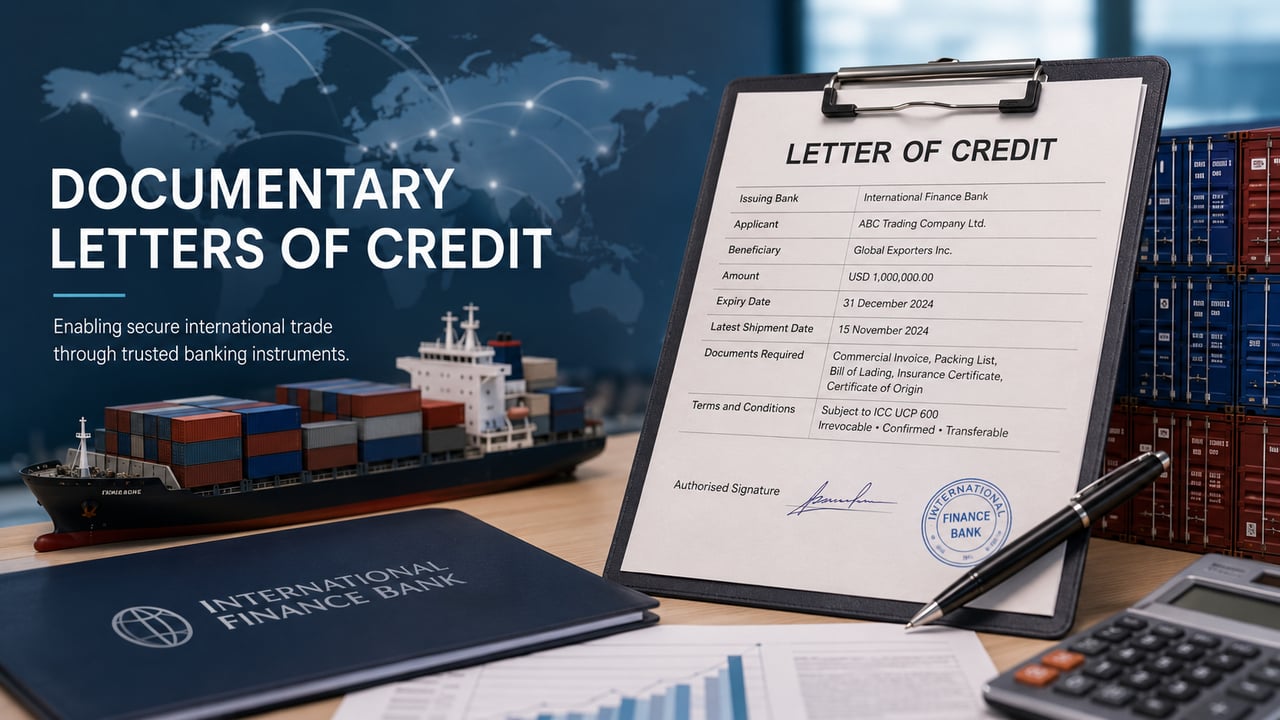
Documentary Letters of Credit
Understanding The Letter of Credit Application Form:The Letter of Credit Application Form is a crucial document used in international trade transactions to initiate the issuance of a Letter of Credit (LC). It provides detailed information about the parties involved and the terms and conditions of the LC. Understanding the application form is essential to ensure accuracy and compliance with the required regulations. Here are a few paragraphs explaining key aspects related to the understanding of the LC application form.
Key parties in a Letter of Credit:
The LC involves several key parties. The applicant is the party initiating the LC, usually the buyer or importer. The beneficiary is the party who will receive payment under the LC, typically the seller or exporter. The issuing bank is the financial institution that issues the LC on behalf of the applicant. The advising bank, located in the beneficiary's country, receives the LC from the issuing bank and notifies the beneficiary of its existence. Other parties involved may include confirming banks, which add their confirmation to the LC, and the nominated bank, which will make payment to the beneficiary.
The Letter of Credit Process flow:
The process flow of an LC typically involves the following steps: First, the applicant and beneficiary agree on the terms and conditions of the LC, including the type of LC, expiry date, and documents required. The applicant then submits the LC application form to the issuing bank. After the issuing bank approves the application, it issues the LC and sends it to the advising bank. The advising bank verifies the authenticity of the LC and advises the beneficiary accordingly. The beneficiary prepares the required documents, presents them to the nominated bank, and receives payment as per the LC's terms.
Vital Dates and timeframes in Letters of Credit:
Letters of Credit have specific dates and timeframes that must be strictly adhered to. The issuance date is when the LC is issued by the issuing bank. The expiry date is the last date by which the beneficiary must present the required documents to the nominated bank. The shipment date is the date by which the goods must be shipped. These dates and timeframes are crucial as any delays or non-compliance can lead to discrepancies and potential risks for the parties involved.
Vital Terms in LCs to understand:
To effectively understand an LC, it is essential to grasp vital terms used in LCs. These terms include the type of LC (e.g., confirmed, unconfirmed, transferable), the credit amount (the maximum amount available under the LC), the description of goods or services, the expiry date, the applicable Incoterms (international trade terms), and the documents required (e.g., commercial invoice, bill of lading, packing list). Understanding these terms ensures that the parties involved can meet the requirements and avoid discrepancies.
The MT700 and other related SWIFT Messages in Letters of Credit:
The MT700 message is the standard SWIFT message type used for issuing an LC. It contains all the necessary details related to the LC, such as the parties involved, the type of LC, the credit amount, and the terms and conditions. Other related SWIFT messages include the MT701 (issuing bank's amendment), MT710 (applicant's amendment), MT720 (confirmation of an LC), and MT740 (pre-advice of an LC). These messages facilitate efficient communication and ensure accurate transmission of information among the involved banks.Dealing with Amendments in Letters of Credit:
Amendments in LCs may be necessary due to changes in the terms and conditions or unforeseen circumstances. Parties must understand how to handle amendments effectively. Any changes should be communicated through the appropriate SWIFT message, such as MT700 or MT701, depending on the party initiating the amendment. The amendment process typically involves agreement from all concerned parties and may require additional documents or approvals. It is crucial to carefully review and comply with the amendment terms to avoid discrepancies and Discrepancies in LCs refer to any inconsistencies or variances between the documents presented by the beneficiary and the requirements stipulated in the LC. It is important to understand the potential risks associated with discrepancies. Non-compliance with the LC's terms can result in the issuing bank rejecting the documents, leading to delays in payment or even non-payment. Common discrepancies include discrepancies in document dates, quantities, descriptions, or discrepancies between the documents and the LC's requirements. To minimize risks, parties should carefully review the LC's terms, ensure document accuracy, and seek professional advice if discrepancies arise.International
Regulations governing Letters of Credit (ICC UCP Latest Edition):
The International Chamber of Commerce (ICC) Uniform Customs and Practice for Documentary Credits (UCP) is the globally recognized set of rules that govern Letters of Credit. It provides a standardized framework for the interpretation and application of LCs, ensuring consistency and reducing disputes in international trade. It is crucial to understand the latest edition of the UCP, as it outlines the rights, obligations, and responsibilities of the parties involved, as well as the guidelines for document examination and dispute resolution. Adhering to the UCP rules promotes trust, transparency, and uniformity in LC transactions.Key queries in Letters of Credit:
Understanding key queries in LCs is vital to clarify any doubts or seek necessary information during the process. Common queries may include inquiries about the LC's validity, clarification on the required documents, requesting amendments or extensions, verifying discrepancies, or seeking confirmation of payment. Clear communication and prompt resolution of queries contribute to smooth transaction processing and mitigate potential risks or misunderstandings.
Benefits and risks of Specialized Letters of Credit:
Specialized Letters of Credit cater to specific trade scenarios and provide additional flexibility or features beyond standard LCs. Here are a few examples of specialized LCs:
- Standby Letter of Credit: Used as a guarantee of payment if the applicant fails to fulfill their obligations. A Standby Letter of Credit (SBLC) is a financial instrument used as a guarantee of payment in case the applicant fails to fulfill their obligations. It serves as a form of security for the beneficiary, providing assurance that they will receive payment if certain conditions are not met. SBLCs are commonly used in various situations, such as construction projects, performance contracts, or as a substitute for a bank guarantee. Understanding the purpose and mechanics of SBLCs is crucial for both applicants and
- Back-to-Back Letter of Credit: Involves two separate LCs, where the beneficiary of the first LC becomes the applicant of the second LC. A Back-to-Back Letter of Credit is a specialized type of LC that involves two separate LCs. In this arrangement, the beneficiary of the first LC becomes the applicant of the second LC. The first LC serves as collateral for the second LC, allowing the beneficiary to secure the necessary goods or services from a third party. This structure enables intermediary parties, such as middlemen or traders, to facilitate transactions without using their own funds. Understanding the complexities and requirements of back-to-back LCs is essential to effectively navigate the dual LC process and ensure compliance with the terms and conditions of both LCs.
- Green Clause Letter of Credit: Provides pre-shipment financing to the beneficiary for the production or procurement of goods. A Green Clause Letter of Credit (GCLC) is designed to provide pre-shipment financing to the beneficiary for the production or procurement of goods. The "green clause" refers to a clause in the LC that allows the beneficiary to request funds for activities such as warehousing, packaging, or quality inspection prior to shipment. GCLCs are commonly used in industries where goods require additional processing or preparation before being shipped. Understanding the specific terms and conditions of a GCLC, including the permitted amount and usage of funds, is crucial for both applicants and beneficiaries to effectively utilize this specialized form of financing.
- Red Clause Letter of Credit: Allows the beneficiary to receive an advance payment before shipment. A Red Clause Letter of Credit (RCLC) is a unique type of LC that allows the beneficiary to receive an advance payment before shipment. The "red clause" refers to a clause in the LC that specifies the amount of the advance payment that can be made. This type of LC provides financial support to the beneficiary, enabling them to cover initial costs or prepare the goods for shipment. RCLCs are commonly used in industries where upfront expenses, such as raw material procurement or customization, are necessary. Understanding the terms and conditions of an RCLC, including the amount of the advance payment and any restrictions, is crucial for both applicants and beneficiaries to effectively utilize this form of pre-shipment financing.
- Transferable Letter of Credit: Enables the beneficiary to transfer all or part of the LC amount to a second beneficiary. A Transferable Letter of Credit is an LC that enables the beneficiary to transfer all or part of the LC amount to a second beneficiary. This type of LC is particularly useful when the original beneficiary, often acting as an intermediary or middleman, needs to involve another party in the transaction. The transferable LC allows the original beneficiary to transfer their rights under the LC to the second beneficiary, who can then fulfill the contract and receive payment. Understanding the transferable LC process, including the roles and responsibilities of the parties involved, is crucial to effectively manage the transfer and ensure compliance with the LC terms.
- Revolving Letter of Credit: Can be used multiple times within a specified period, allowing for continuous trade between the parties. A Revolving Letter of Credit is a type of LC that can be used multiple times within a specified period, allowing for continuous trade between the parties. It eliminates the need to issue a new LC for each transaction, providing flexibility and efficiency in ongoing trade relationships. Revolving LCs are commonly used when there is a regular flow of goods or services between the buyer and seller. Understanding the terms and conditions of a revolving LC, including the maximum amount and validity period, is crucial for both parties to effectively manage their trade relationship and ensure the uninterrupted flow of goods or services.
These specialized LCs offer benefits such as enhanced financing options, increased trade facilitation, and risk mitigation. However, they also come with their own set of risks, including complexities in documentation, increased administrative procedures, and potential discrepancies or disputes. Parties should thoroughly understand the terms and conditions of specialized LCs and assess the associated benefits and risks before engaging in such transactions.
Sale of a letter of credit (LC)?
It is important to clarify the legal and practical framework surrounding such transactions.
Nature of a Letter of Credit
- A standard LC is not a negotiable instrument. It cannot be freely “sold” like a bill of exchange or promissory note. It is a contingent undertaking issued by a bank, payable only upon presentation of compliant documents.
Permissible Structures
- Transferable LC: If your LC is expressly designated as transferable, it may be transferred to another beneficiary under the terms set by the issuing bank.
- Assignment of Proceeds: You may assign the right to receive the proceeds to a financier, though this does not transfer the underlying rights to present documents.
- Discounting / Forfaiting: If the LC is a deferred payment LC and documents have been accepted, you may discount the receivable with a bank or financial institution.
- Back-to-Back LC: You may use the LC as collateral for the issuance of another LC to your supplier.
Potential Problems and Risks
- If the underlying commercial transaction does not materialise (e.g. goods not shipped, documents not compliant), no payment will be made, and any purchaser of the LC rights would suffer a loss.
- Even minor discrepancies in documentation can invalidate payment.
- Regulatory, jurisdictional, and banking restrictions may limit transfer, assignment, or discounting.
- Fraud, sanctions, or insolvency of counterparties can block or delay payment.
Summary
The LC itself cannot simply be “sold” outright. What can be transacted are the rights to proceeds, or the receivable after document acceptance, or the economic utility through transferability if the LC was structured accordingly. Each route requires careful structuring to avoid unenforceable arrangements or unexpected losses.Should you wish, we can review the specific terms of your LC and advise which, if any, of the above mechanisms may be available in your case.
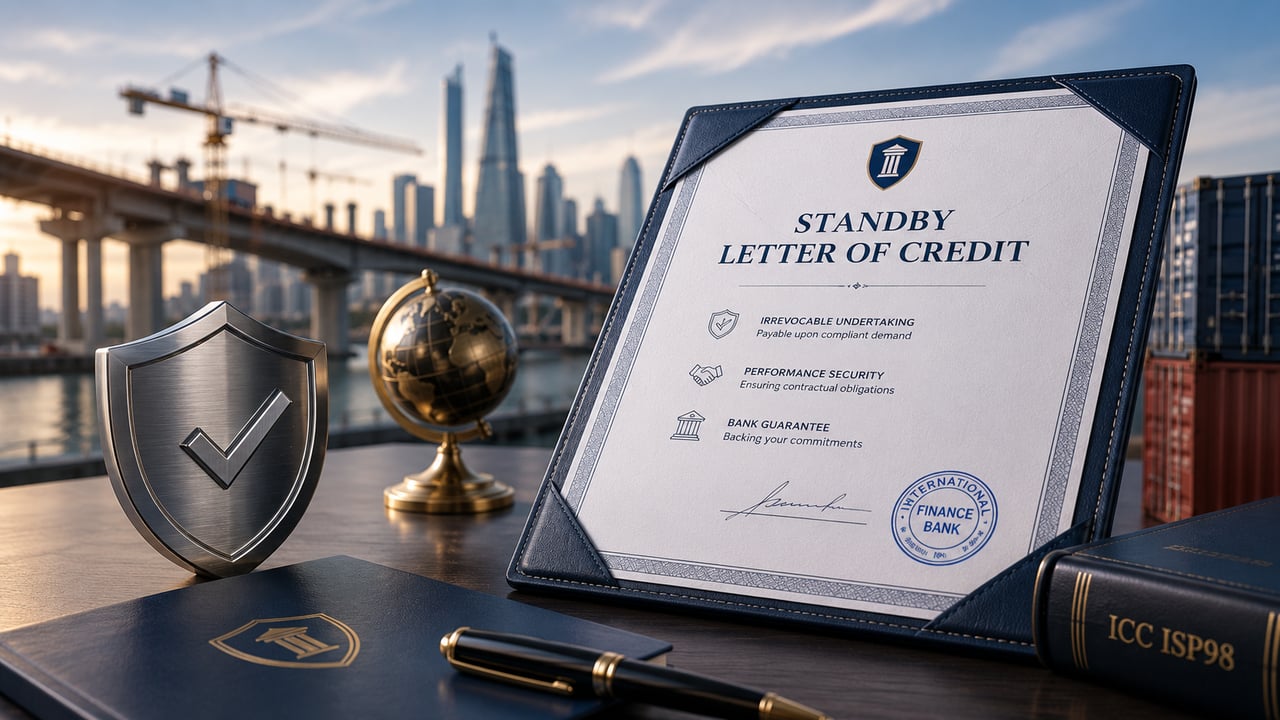
Standby Letters of Credit (SBLCs)
Standby Letters of Credit - A Contingent Financial Undertaking
A Standby Letter of Credit (SBLC) is an irrevocable undertaking issued by a bank on behalf of its client, whereby the issuing bank agrees to honour a compliant demand for payment if the applicant fails to fulfil specified contractual or financial obligations.
Unlike a Documentary Letter of Credit (DLC), which serves primarily as a payment mechanism within international trade, an SBLC functions as a contingent guarantee. It is intended to remain unused during the normal course of business and is only called upon in the event of default by the applicant.
SBLCs are widely utilised in international commerce, project finance, infrastructure development, construction, commodity trading, corporate transactions, and institutional financing to mitigate counterparty risk and enhance commercial confidence.
Typical Applications
Standby Letters of Credit are commonly employed to support:
- Payment obligations under commercial contracts.
- Performance obligations in construction and infrastructure projects.
- Supply agreements.
- Government procurement contracts.
- Equipment purchases and leasing arrangements.
- Commodity trading transactions.
- Credit enhancement for financing facilities.
- Advance payment security.
- Bid and tender guarantees.
Because an SBLC substitutes the creditworthiness of the issuing bank for that of the applicant, it frequently enables counterparties to transact with greater confidence.
Principal Parties
A typical SBLC transaction involves several parties:
Applicant
The party requesting the issuance of the SBLC and whose obligations are being secured.
Beneficiary
The party entitled to make a demand under the SBLC should the applicant fail to perform its contractual obligations.
Issuing Bank
The bank issuing the SBLC and assuming the independent payment obligation.
Advising Bank
The bank responsible for authenticating and forwarding the SBLC to the beneficiary.
Confirming Bank (where applicable)
A second bank that adds its own independent undertaking to honour compliant demands.
How an SBLC Works
A typical transaction follows these stages:
- The applicant and beneficiary conclude a commercial agreement requiring an SBLC.
- The applicant requests issuance from its bank.
- The issuing bank performs credit, compliance and risk assessments.
- Upon approval, the SBLC is issued.
- The SBLC is advised to the beneficiary through the banking system.
- The applicant performs its contractual obligations.
- If performance is completed successfully, the SBLC expires unused.
- If the applicant defaults, the beneficiary may submit a compliant demand in accordance with the terms of the SBLC.
Common Types of SBLCs
Depending upon the underlying transaction, several forms of SBLC may be issued.
Financial SBLC
Provides security for payment obligations arising under financing or commercial transactions.
Performance SBLC
Secures contractual performance rather than payment.
Advance Payment SBLC
Protects advance payments made before goods or services are delivered.
Bid Bond SBLC
Supports participation in competitive tenders.
Counter SBLC
Issued in favour of another bank, enabling the issuance of a local guarantee.
Direct Pay SBLC
Provides scheduled payment support under financing arrangements.
Insurance SBLC
Supports obligations arising under insurance or reinsurance contracts.
Demand Requirements
An SBLC only becomes payable when the beneficiary presents documents strictly complying with its terms.
Typical presentation requirements may include:
- Written demand for payment.
- Statement confirming applicant default.
- Supporting documentation, where required.
- Presentation before the expiry date.
- Compliance with all documentary conditions specified within the SBLC.
Banks examine documents only. They do not determine whether the underlying commercial dispute is justified.
Governing Rules
Most international SBLCs are issued subject to one of the following internationally recognised rule sets:
- ICC International Standby Practices (ISP98).
- ICC Uniform Customs and Practice for Documentary Credits (UCP 600), where expressly incorporated.
These internationally recognised standards provide legal certainty and promote consistency across jurisdictions.
Advantages
Standby Letters of Credit offer numerous commercial benefits.
For beneficiaries:
- Reduced counterparty risk.
- Greater payment security.
- Improved confidence when entering international transactions.
- Enhanced access to financing opportunities.
For applicants:
- Preservation of working capital.
- Improved commercial credibility.
- Ability to support larger projects.
- Facilitation of international business relationships.
Risks and Considerations
Although SBLCs are widely recognised financial instruments, several risks should be understood.
For beneficiaries:
- Non-compliant document presentation.
- Expired validity periods.
- Sanctions or regulatory restrictions.
- Creditworthiness of the issuing bank.
For applicants:
- Issuance fees.
- Collateral requirements.
- Potential reimbursement obligations following payment.
- Risk of wrongful or disputed drawings.
Professional legal and banking advice should always be obtained before entering into significant SBLC transactions.
Frequently Asked Questions
Is an SBLC the same as cash?
No. An SBLC is a contingent undertaking issued by a bank. It is not cash, a deposit, or an immediate payment instrument.
Is an SBLC intended to be drawn?
Generally not. An SBLC is designed to remain unused if the applicant fulfils its contractual obligations.
Can an SBLC be transferred?
Only if the specific terms of the instrument expressly permit transfer or assignment and applicable law allows it.
Can an SBLC be used as collateral?
Depending upon the issuing institution, transaction structure, regulatory requirements and credit assessment, certain financial institutions may consider an SBLC as part of a broader collateral package. Such decisions remain entirely at the discretion of the financing institution.
Does every bank issue SBLCs?
No. Issuance depends upon the bank’s internal policies, regulatory framework, credit approval process and risk appetite.
Important Clarification
- A Standby Letter of Credit should not be confused with an investment product or a negotiable financial asset.
- An SBLC is an independent banking undertaking intended to secure specific contractual obligations. Any financing, discounting or credit facilities involving an SBLC remain subject to comprehensive due diligence, compliance review, credit assessment and the policies of the institutions involved.
- The existence of an SBLC alone does not create an automatic entitlement to financing, monetisation or liquidity.
IFB’s Approach
International Finance Bank evaluates each SBLC transaction individually.
Where appropriate, IFB may provide advisory services, issuance support, confirmation arrangements, structured financing solutions or related banking services, subject to comprehensive compliance procedures, risk assessment and applicable regulatory requirements.
Every transaction is assessed on its individual merits, taking into account the quality of the issuing institution, the underlying commercial purpose, jurisdictional considerations and the overall risk profile.
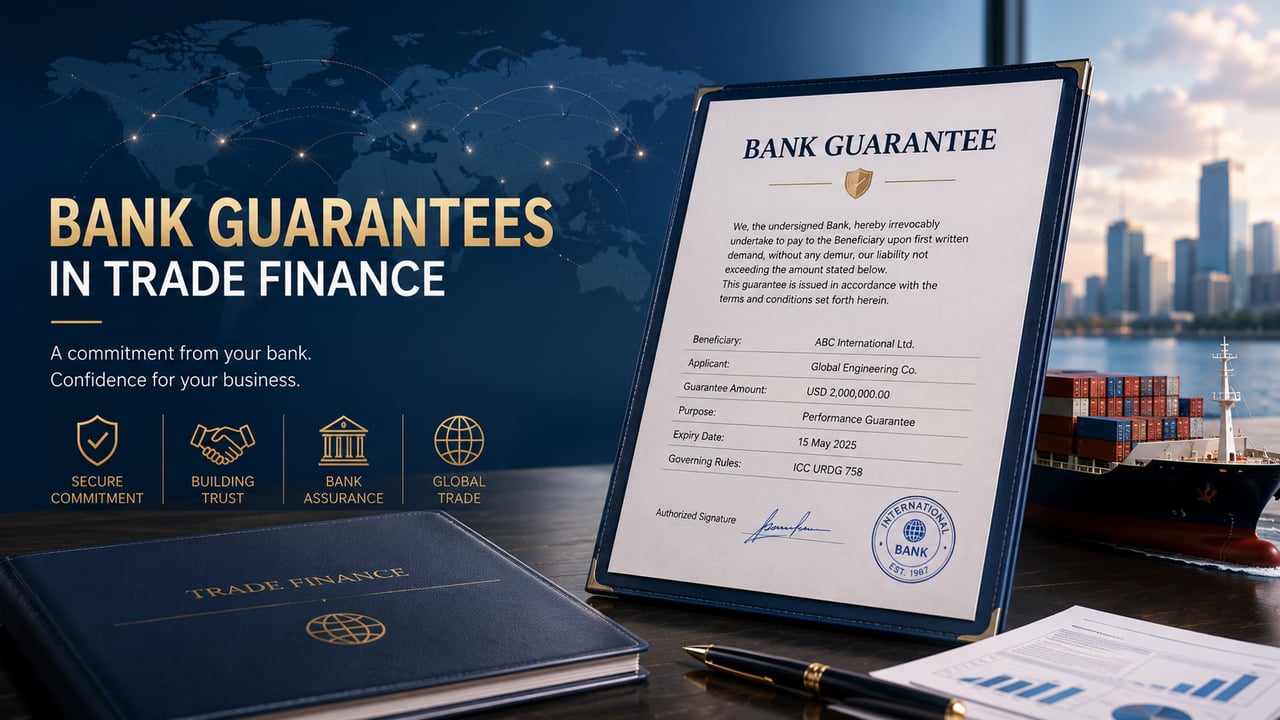
Bank Guarantees
Bank Guarantees - Strengthening Confidence in Commercial Transactions
A Bank Guarantee is an irrevocable undertaking issued by a bank on behalf of its client, whereby the issuing bank agrees to pay a specified amount to the beneficiary upon presentation of a compliant demand, should the applicant fail to fulfil its contractual or financial obligations.
Bank Guarantees are widely used in both domestic and international commerce to reduce counterparty risk and provide assurance that contractual commitments will be honoured. They play a central role in construction projects, public procurement, infrastructure development, commodity trading, manufacturing, and cross-border commercial transactions.
Unlike Documentary Letters of Credit, which facilitate payment for the exchange of goods and documents, Bank Guarantees serve primarily as a risk mitigation instrument. They provide financial security against non-performance or non-payment rather than functioning as a payment mechanism.
Typical Applications
Bank Guarantees are commonly used to support:
- Construction and infrastructure projects.
- Public procurement contracts.
- International supply agreements.
- Manufacturing and industrial projects.
- Commodity trading.
- Equipment purchases and leasing.
- Advance payment protection.
- Contract performance obligations.
- Payment obligations under commercial agreements.
- Customs and tax obligations where permitted.
By substituting the creditworthiness of the issuing bank for that of the applicant, Bank Guarantees enable businesses to enter into commercial relationships with increased confidence and reduced financial risk.
Principal Parties
A typical Bank Guarantee transaction involves several parties.
Applicant
The party requesting the issuance of the Bank Guarantee and whose contractual obligations are being secured.
Beneficiary
The party entitled to make a demand under the Bank Guarantee if the applicant fails to fulfil its obligations.
Issuing Bank
The bank issuing the guarantee and assuming the independent payment obligation in accordance with its terms.
Advising Bank (where applicable)
The bank responsible for authenticating and advising the guarantee to the beneficiary.
Counter-Guarantor (where applicable)
A financial institution issuing a counter-guarantee in support of another bank issuing a local guarantee.
How a Bank Guarantee Works
A typical transaction follows these stages:
- The applicant and beneficiary enter into a commercial agreement requiring a Bank Guarantee.
- The applicant requests issuance from its bank.
- The issuing bank performs credit, compliance and risk assessments.
- Upon approval, the Bank Guarantee is issued.
- The guarantee is delivered or advised to the beneficiary.
- The applicant performs its contractual obligations.
- If the obligations are fulfilled, the guarantee expires without payment.
- If the applicant defaults, the beneficiary may submit a compliant demand in accordance with the terms of the guarantee.
Common Types of Bank Guarantees
Different forms of Bank Guarantees are available depending upon the underlying transaction.
Performance Guarantee
Secures the satisfactory performance of contractual obligations.
Payment Guarantee
Provides assurance that payment obligations will be fulfilled.
Advance Payment Guarantee
Protects advance payments made before contractual performance.
Bid Bond Guarantee
Supports participation in competitive tender procedures.
Retention Money Guarantee
Replaces retained contract funds while protecting the employer against defective performance.
Warranty or Maintenance Guarantee
Provides security during the contractual warranty or maintenance period.
Customs Guarantee
Supports customs duties and related obligations where permitted by local regulations.
Demand Requirements
A Bank Guarantee becomes payable only upon presentation of a demand complying with its terms.
Typical presentation requirements may include:
- Written demand.
- Statement of applicant default.
- Supporting documentation, where required.
- Presentation before the expiry date.
- Compliance with all documentary requirements specified within the guarantee.
Banks examine the documents presented rather than the underlying commercial dispute.
Governing Rules
Many international Bank Guarantees are issued subject to internationally recognised rules published by the International Chamber of Commerce (ICC), including:
- ICC Uniform Rules for Demand Guarantees (URDG 758).
- ICC Uniform Rules for Contract Guarantees (URCG 325), where applicable.
- National banking and commercial law.
The applicable rules are determined by the wording incorporated into the individual guarantee.
Advantages
Bank Guarantees provide significant commercial benefits.
For beneficiaries:
- Reduced contractual risk.
- Increased confidence in counterparties.
- Enhanced security for payment or performance.
- Greater certainty in cross-border transactions.
For applicants:
- Improved commercial credibility.
- Enhanced ability to participate in major projects.
- Preservation of liquidity compared with cash deposits.
- Facilitation of domestic and international business opportunities.
Risks and Considerations
Although Bank Guarantees are well-established financial instruments, several considerations remain important.
For beneficiaries:
- Incorrect document presentation.
- Expiry of the guarantee.
- Sanctions or regulatory restrictions.
- Credit quality of the issuing bank.
For applicants:
- Issuance and renewal fees.
- Collateral or security requirements.
- Reimbursement obligations following payment.
- Risk arising from disputed or wrongful demands.
Professional legal and banking advice should be obtained before entering into significant guarantee arrangements.
Frequently Asked Questions
Is a Bank Guarantee the same as a Letter of Credit?
No. A Documentary Letter of Credit is a payment mechanism supporting the exchange of goods and documents. A Bank Guarantee is a contingent undertaking designed to protect against contractual default.
Is a Bank Guarantee the same as cash?
No. A Bank Guarantee is an independent undertaking by a bank. It is not cash, a deposit or a transferable financial asset.
Can a Bank Guarantee be transferred?
Only if the terms of the guarantee expressly permit transfer or assignment and applicable law allows it.
Can a Bank Guarantee be used as collateral?
Depending upon the financing institution, transaction structure, regulatory requirements and credit assessment, a Bank Guarantee may be considered as part of a broader collateral package. Acceptance remains entirely at the discretion of the financing institution.
Does every bank issue Bank Guarantees?
No. Issuance depends upon the institution’s internal policies, regulatory framework, credit approval process and risk appetite.
Important Clarification
A Bank Guarantee should not be regarded as an investment product or a negotiable financial instrument.
Its purpose is to secure specific contractual obligations between commercial parties. Any financing or credit facilities involving a Bank Guarantee remain subject to comprehensive due diligence, compliance review, credit assessment and the policies of the financial institutions involved.
The existence of a Bank Guarantee does not, by itself, create an automatic entitlement to financing or liquidity.
IFB’s Approach
International Finance Bank evaluates each Bank Guarantee transaction individually.
Where appropriate, IFB may provide advisory services, issuance support, counter-guarantee arrangements, structured trade finance solutions and related banking services, subject to comprehensive compliance procedures, credit assessment and applicable regulatory requirements.
Every transaction is evaluated on its individual merits, taking into account the quality of the applicant, the commercial purpose of the guarantee,
Do you still have questions?
Please book a Zoom Videoconference here: